

Starting over my professional life. Three months in…
Bagging For Business #5

Deutsche Version hier.
In today’s newsletter, I want to reflect on the past few weeks and how my journey of going fully self-employed, learning a new craft, and starting a new professional life is going so far. These are the topics:
Entrepreneurship—spiced up with my own approach.
Mastering the Craft of Bag Making
Learning to Sew
Buying a Sewing Machine
Virtual Tailoring with CLO 3D
Documenting the Whole Process Online.
My Next Steps
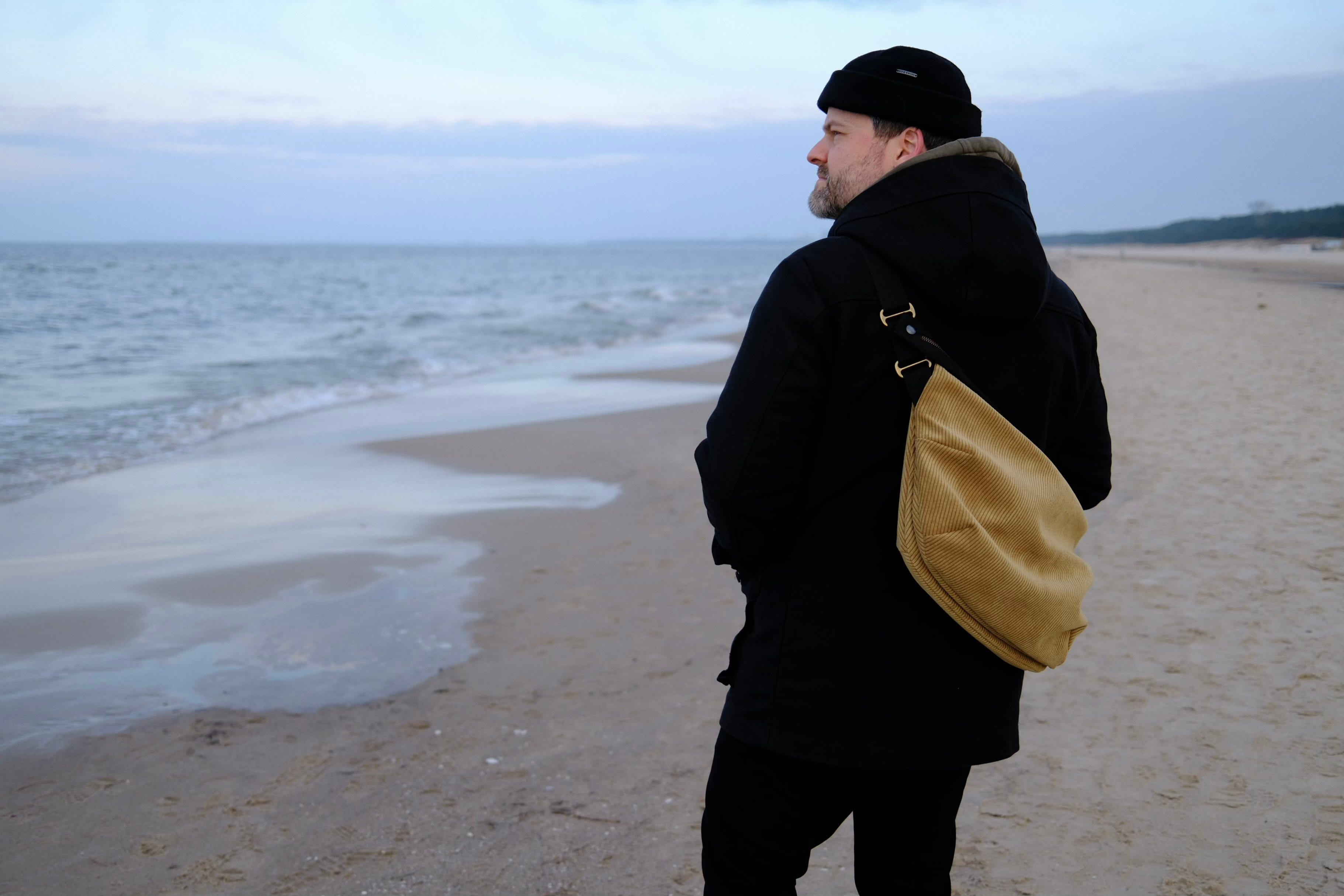
Entrepreneurship—spiced up with my own approach.
The first thing I did at the beginning of this year was dive deep into business and entrepreneurship literature. I had already started researching authors and approaches way back in 2024, so by the time I woke up on the morning of January 3rd, a pile of books was waiting for me beside my bed.
So what did a month of distilling information and smoking my brain result in?
First of all, the process helped me define what I actually want. Do I want to be rich from what I set out to do? Sure. But what does “rich” or “wealthy” actually mean to me?
I Am Wealthy If…
I spend my time being with people I love and admire—Family and friends.
I‘m healthy, taking care of myself physically and mentally.
I create things others find beautiful, useful and inspiring.
I am free and have the choice to explore life, univeral truths & my passions.
I’m just able to pay for it all.
I Am Not Wealthy If…
My possessions—and ultimately money—hold me hostage.
So, how am I realizing all of that? What is my plan?
Is it possible to do that with a 9-5 job? Perhaps, but it‘s a pretty big gamble. Most people work for 45 years (probably more in the future) and then retire, hoping they’ve saved and invested enough money to finally live freely. That‘s not for me. I don‘t want to trade my whole life just to live freely when I‘m old.
The other gamble is entrepreneurship, which takes 5-10 years of intense work to kick off. There are some core steps that all blend together and are designed to lead me to wealth:
Step 1: A Mindset Shift
Switching from being a consumer to being a producer. It doesn’t sound like much, but this is the main ingredient in becoming an entrepreneur. The classic analogy: Instead of digging for gold, sell shovels.
Step 2: Stay True To Your Artistic Integrity.
As I wrote in my previous newsletter:
„Start with truth—make what matters to you. Then, refine, but don’t pander. Use feedback to sharpen your vision, not dilute it.“

Right now, that’s my main focus—learning the craft of making bags by designing things I actually want to use.
Step 3: Listen and Solve Problems.
Business is all about opportunity. As the “selling shovels” analogy suggests, listening and understanding needs is key. Solve problems.
That’s why I started with surveys and sharing my creations online. You wouldn’t believe how many insights I’ve already gathered—insights that allow me to improve my products and offer something of value.
Step 4: The Commandment of Control.
I need to be in control of everything in and around my business—organization, products, pricing, financial planning, and operations. I need to be the driver, not a hitchhiker.
Lack of control is the main reason startups fail: A great example is Sebastian Kupfer’s e-mobility startup failure
Last week, I finally found a tax office to help me with accounting and financial management. But I only decided to work with them because they respected my need for control and were willing to teach me the process in depth—something I still lack.
Step 5: Detaching Time.
My business and income need to be detached from my time. A business tied to my time is just a job.
This is the big one, and the most important step. As an entrepreneur, I need to work on my business rather than in it. I need to develop systems that allow it to run without my constant involvement.
That means shifting from being the technician doing the work to being the entrepreneur designing a scalable, self-sufficient company.
I’m not naïve enough to think I can achieve all of this overnight. I know the next five years (or more) will be a lot of work. But if I succeed, the chances are hig that I’ll be wealthy in the way I defined earlier.
Mastering the Craft of Bag Making
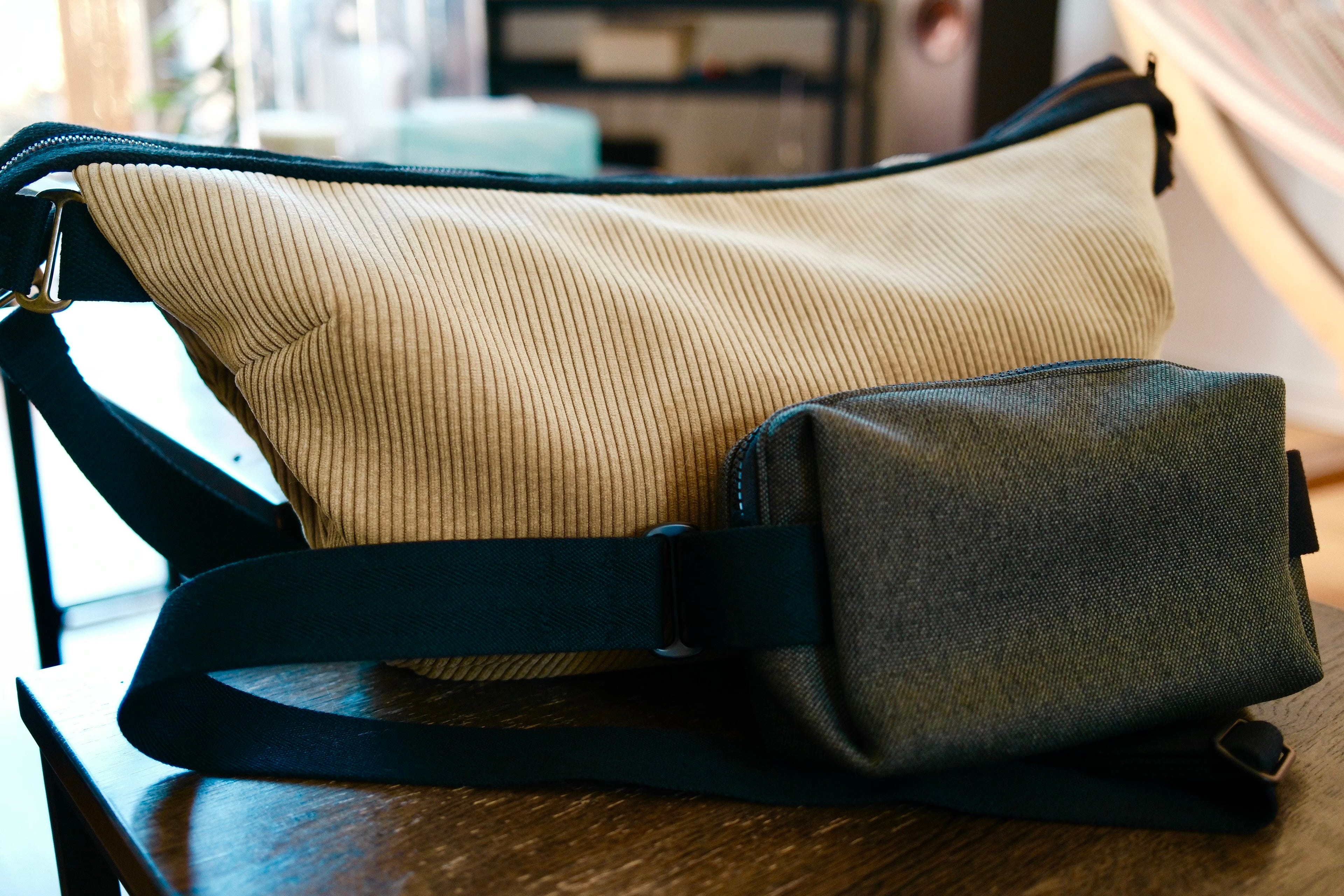
Learning To Sew
Let‘s move to the second construction side I started working on around end of January. I could have just hired someone to do the sewing, but I firmly believe that knowing how to build bags from scratch allows me to be more creative and specific with what I want to achieve.
I looked for sewing courses all over Potsdam and Berlin. What I found was dissapointing:
„Beginner Course—February until May, 45 min, once per week.“
45 minutes, once per week, seriously? The first session was just an introduction to the machine. What was I supposed to do with the rest of the week? That wasn’t going to work.
Instead, I called in a favor from a friend and former Volkswagen colleague, who offered to teach me the basics. Another former colleague lent me a sewing machine.
The crash course started with me shouting:
„Ahhh, so there are two threads—one from above and one from below!“
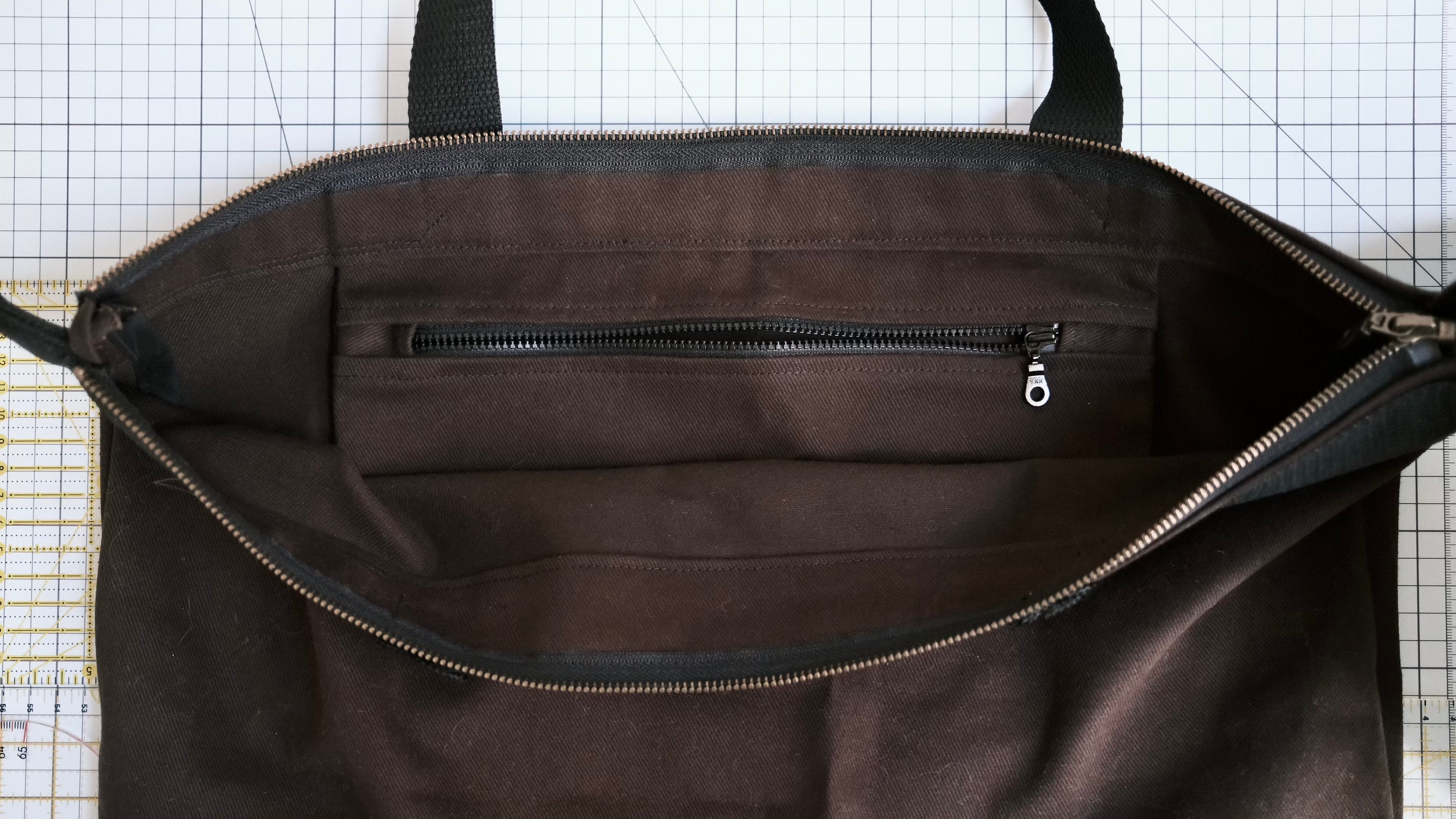
That’s the level of proficiency my friend had to deal with. But by the end of the day—thanks to her amazing teaching skills—I knew all the basics. By day two, I had already sewn this:
Buying a Sewing Machine
After that, I decided to buy my own sewing machine. The Singer Heavy Duty I borrowed struggled with thick fabrics, and I didn’t want to return it in pieces.
I visited a local dealer at Textile and explained my needs:
Longevity – I’ll use it almost every day, and it needs to be easy to repair.
Power & Build Quality – It should handle heavy fabrics effortlessly.
He said: „You won’t believe it but making proper bags and needing these qualities is pretty niche.“ (talking about household machines).
The dealer spent an hour explaining his recommendation—what a respectable dude! He repairs machines himself and offers fair pricing.
This is it. I‘m 100% sure that somewhere in the menu, this thing has a “Fly to the Moon” option:
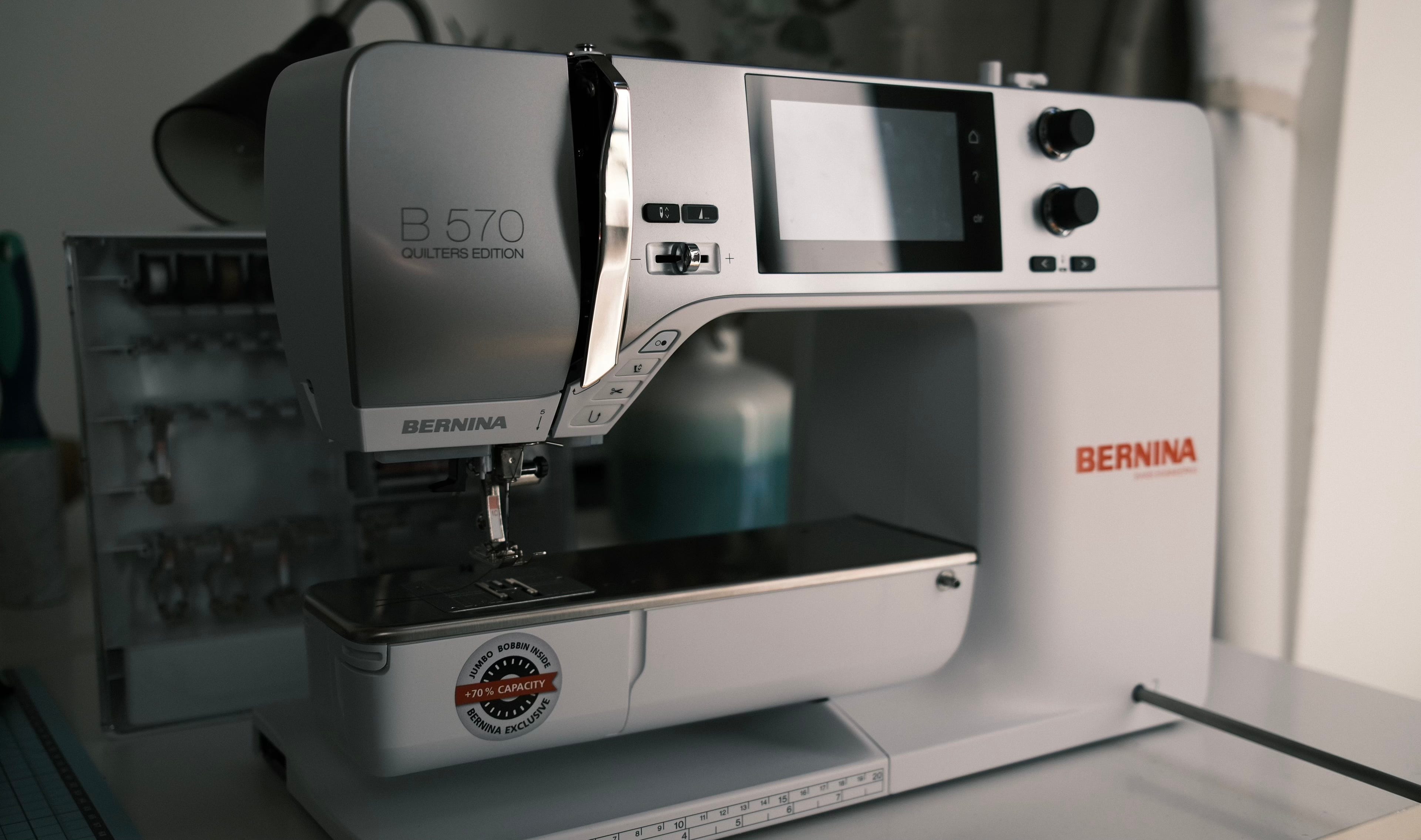
Bag-making is such a rewarding craft, and not only with this machine which is on another level. It takes only a few days to go from sketch to finished product.
But to limit the amount of iterations, wasting materials, and spending hours cutting patterns, I wanted to learn another skill…
Virtual Tailoring with CLO 3D
During my time at Volkswagen I worked with many digital modeling tools. Learning CLO 3D (which is the same core as Marvelous Designer btw. For the nerds.) was a no brainer.
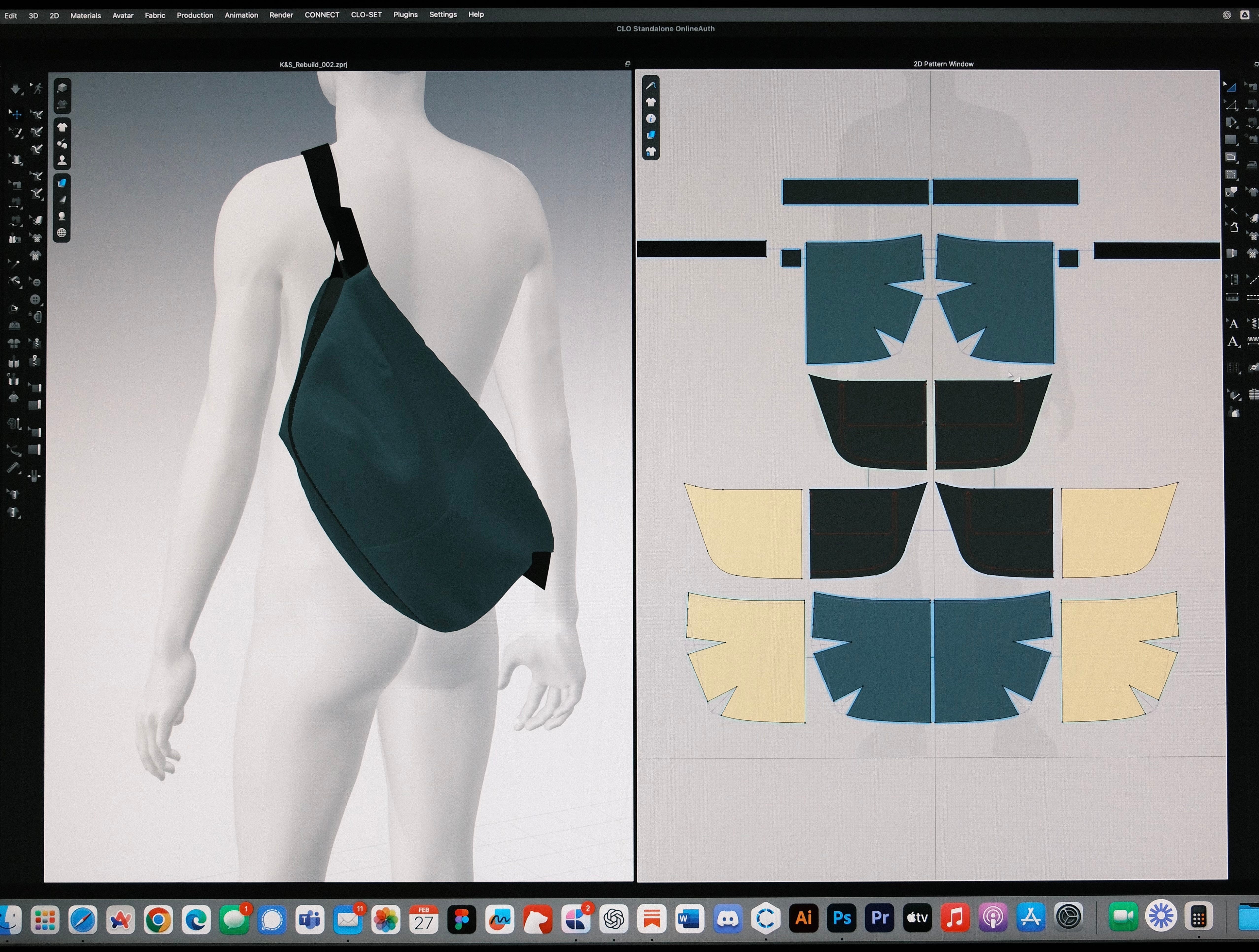
It allows you to design patterns of everything that needs sewing. With the press of a button it simulates material behavior and you can watch your piece come to life.
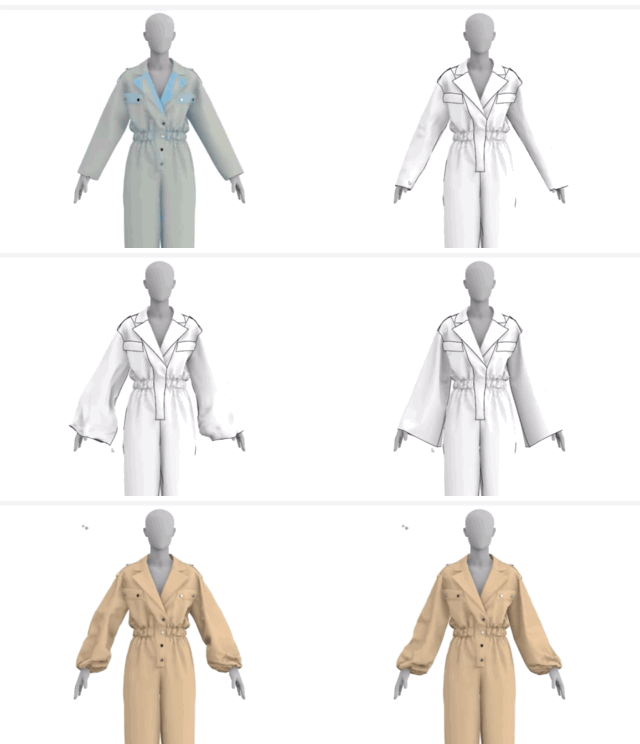
The only downside is that the physical interaction between soft and hard materials is quite buggy still. Something like testing belts running through hoops doesn’t work.
But anyway it speeds up the process a lot. Another mouse click and it prints a poster you can use cut your patterns in real life.
Documenting the Whole Process Online.
Why am I doing this? Three reasons:
Escaping the hamster wheel is hard. It’s hard to live a life full of motivation and sense of direction. I’d rather offer something to the world in exchange for money than offering something I don’t care about to some boss in exchange for a paycheck. It was hard for me, and if Volkswagen hadn’t laid us off, I don’t know if I would have had the courage to start this. I hope my work inspires others to take bold steps.
Writing helps me organize my brain. Documenting the process helps me strategize. Creating these posts and newsletters manifest the steps along the journey. Looking back at these newsletters in 10 years will be fascinating.
The world only talks about success stories. But the struggle behind success is more interesting to me. Success stories and even detailed biographies never really capture the truth. They glorify and pack everything to a well crafted drama. Experience is different, that‘s what I want to capture.
So follow me here and on Instagram.
Did you know that with the Substack App you can also see my „Notes“ with pictures and videos? If you‘re not on Instagram, you can also follow along like this.
To be honest, I’d love to delete Instagram one day—Substack feels way more chill. If Instagram is a stage, and you act out in front of an audience, Substack feels more like sitting around a campfire with friends.
My Next Steps
Branding
I have a long list of potential brand names and logo ideas. Soon, I want to hire a graphic designer to help me develop the branding. I‘m really looking forward to this one.
I waited with this because I wanted to find the characteristics of the brand by developing products. And the more bags I make the more I feel I get a sense of what my brand is going to be about.
I‘ll write another newsletter on these ideas in detail, but one thing will definitely be central to the brand: haptics.
Most of the bags I like using because of their concepts and functionality are made of plastic. You feel that hear the crackle touching the materials. I want my products to feel cozy and soft, but strong at the same time. That‘s why I started using upholstery textiles because they just feel very nice and are super robust. Let‘s see where further investigations will lead me.
Advanced Bag Making Course
I‘m pretty confident that my current sewing skill is enough to build prototypes. Especially because the serial product needs to be finalized together with the production facility anyway.
Still, I have this vision of immersing myself in traditional leatherwork—maybe in an old workshop in Italy, learning from a master craftsman.
There‘s still so much to learn, so many techniques I have no clue of, especially if you want to create life lasting gear.
Designing and Developing The First Products
My last poll was about finding out which of the 6 bag concepts I described are going to be made first.
If you haven’t voted yet, this is your last chance!
Three of the six lead the pack so I‘ll focus on all of them and share the process soon. I want to have a choice between three finished products. With your help I want to decide which of them will enter production and hoped to be financed by a crowd funding campaign.
Researching Suppliers and Manufacturers.
Local textile shops cater to hobbyists. It’s more than enough for the prototyping stages, but there’s not a big and high quality selection.
I need to connect with industrial suppliers for higher-quality materials and attend professional textile fairs.
Phew, that was a lot! But I hope you enjoyed this one!
See you soon!

So impressive what you’ve already achieved in the first few weeks! ❤️🚀