

Translating the Gut
What Losing and Finding My WHY Taught Me

In issue #8 of Bagging For Business, I reflect on how writing down my WHY brought clarity after years of trying to rationalize my emotions. I share how instinct and learning started aligning, and how I try to pour my soul into matter—whether in bags or words.
Lies hier die Deutsche Version
A former colleague of mine asked me recently:
“Why bags?”
“I dunno, I love them.”
“Why?”
“I always liked textiles, I like how they are made, I guess…”
“Why do you want to make them?”
“I want to master a new craft.”
“But why a business then?”
“Why, why… Because it feels right! I had that moment when they laid us off, an impulse to do that, and it clicked!”
He just looked at me. As if he was waiting for something he didn't get yet.
“It felt like the passion for cars I had when I was a child. I was looking for that.”
“Haha sorry, I didn‘t want to push you. I‘m doing this business course at the moment and they force us to ask why. Forget about it.”
But I didn’t. This question lingered inside. Every morning I could sense that my subconscious had been wrestling with this word, with this simple question.
Day by day I felt better.
And then one day, in a famous moment of laziness a sentence formed in my head:
Capturing the Soul in Matter
That‘s why I do things, why I have always done them. I’ve always been fascinated by the fact that some artists, musicians, filmmakers and even designers were able to capture their soul—their personality—outside their own minds. So we as the audience and users can sense their presence through their work.
The ability to write my own WHY down makes things so easy now. Like a quick check-in to see if your ego has drifted off to some other senseless rationalization making you feel miserable.
For example, if this newsletter is there to pour my soul into matter than the newsletter is a container. Literally a vessel for myself, to manifest the path of building this new life.
I believe if we pour ourselves—our true selves—into things, be it text or products, others receive an offer to connect, to be in community with someone that shares the same beliefs.
If we create something without a perceivable WHY, it feels hollow. In terms of text it would be a platitude—if you‘re lucky, fact—but containing no truth to anyone. In terms of a product it would be a commodity, something you compare prices for because you only need it, but not want it.
In my Geist Manifesto I spoke about “making people feel understood.” Now I can concretize: share the same beliefs.
Language and Design are beautiful ways to do that.
With Geist I‘ll try to make this connection with you a multisensory experience. Something to make you feel home.
With my writing I‘ll try to translate my gut. I try to put words for something that makes us go: “Ah, that‘s what I was always trying to say!”
Here‘s where the topic of this issue comes in
While reading all these books relating to business development, I realized that the most valuable thing—next to learning about new methods and approaches—is to be able to rationalize where my instinct was already trying to point me towards.
Reading, listening, and receiving feedback aren’t just about collecting data. It’s choosing the right pieces to a puzzle you know the theme and subject of.
Like helping my gut speak a language my brain can understand.
Losing Touch With My WHY
Materializing soul. A concept I always felt, but was too far off to exist as a tool in the rational part of my brain.
Simon Sinek with his book Start With Way helped me translate what my gut was trying to tell me for the past 5 years, but I wasn’t able to act on it. As a child I had a pretty clear WHY without really knowing.
My life revolved around cars and movies. The relationship with cars was different though. My uncle owns a used car dealership. I spent so much time running around his company picking keys from a huge key rack and playing inside hundreds of cars, pretending to drive, and checking out every corner.
Quickly I developed a sense for which brands and models had it, this famous and mysterious it.
Today I would describe it as soul, others name it personality or character. A feeling that the people behind building these cars put love, care and purpose into the products. There it is, crystal clear, my WHY, already tattooed into my limbic brain: Capturing the Soul in Matter.
As soon as I started studying car design I lost it, and as soon as I worked as an Interior Designer at Volkswagen it was gone for good.
I studied in Pforzheim, the German Mekka for car design offsprings. It‘s all about form and shape exploration. One of the famous questions my professor asked us when reviewing our design proposals was “In which direction does your car drive?”
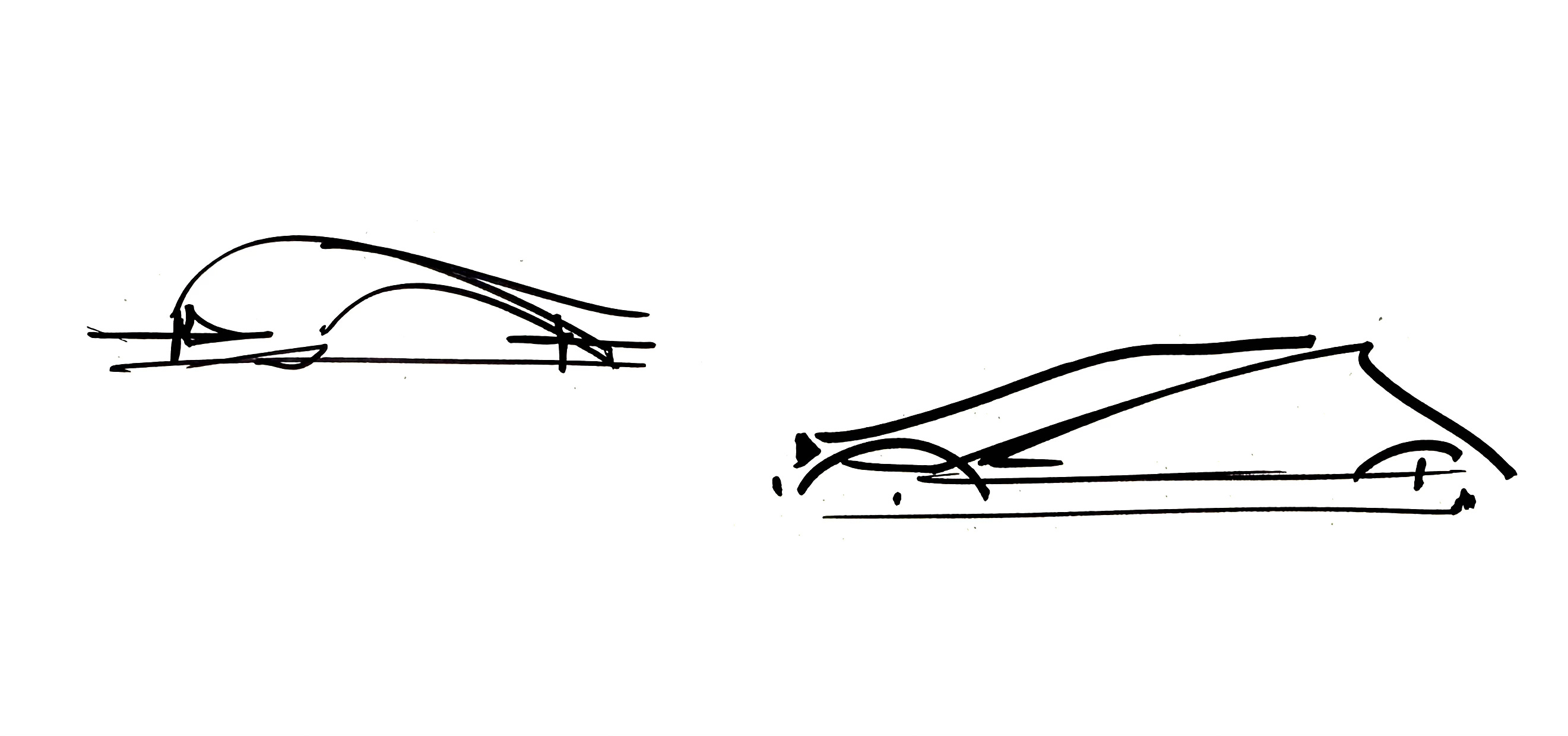
You learn to question the norm, the basics of what a car looks like. It is the artistic way of exploring shapes that express movement. We also had design history and car engineering, sure, still always through the filter of style, era of design, zeitgeist. It was rarely about the product that people end up buying, it was more about the picture of a moving object. It was about how good your sketch is, how memorable your so called theme—the key shape concept, like the wedge shape of sportscars.
That‘s a very superficial description of what a car designers job is. If I weren‘t so confused and blinded by this idea of the job at that stage of my education, I could have seen the opportunity I was looking for. Of course great designer can shape the identity of a brand—be proactive to influence the product—if he keeps on evolving and learning.
I never ended up there because I did what was asked of me. Sketch, and win the competition. And that‘s fine when you‘re starting out as a Junior Designer, but if I had my WHY pinned on the wall I might have seen a clear direction, a north star, that there‘s still so much to learn.
When I started out at the Volkswagen Design Center Potsdam the real school begun. The studio was packed with talented designers who shaped some of the greatest cars. The first years were all about mastering the craft of form development and learning to fit into the process of so many skilled professions. But one thing was really odd to me, and killed my motivation instantly.
The Comfort Trap
Volkswagen is widely permeated and infected with bureaucracy, decadence, laziness, complacency, greed for financial wealth.
And as Simon Sinek points out in his book, this is usually the time when a company looses its WHY. In the case of Volkswagen it was so simple and clear, it‘s in the name: Volkswagen, building a car for the common people. Ask someone common these days if he can afford a Golf
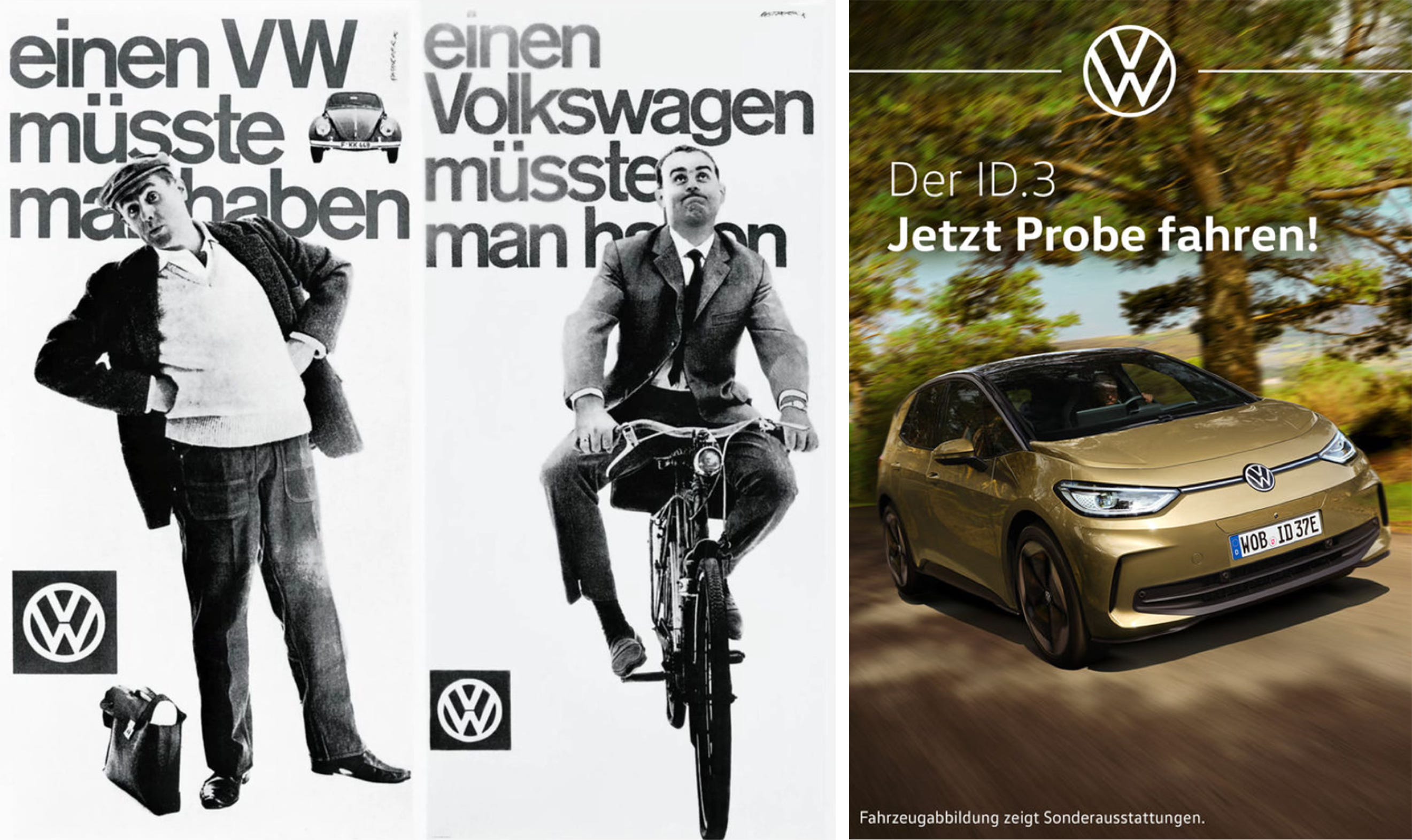
And even when we tried—and I‘d say many from our studio in Potsdam did—to build a real Volkswagen, you ended up crashing…
into walls of engineers telling you what can‘t be done—even if you offered solutions,
walls of bosses changing concepts to more prestigious and luxurious alternatives because they don‘t drive Volkswagens themselves—they are chauffeured,
and walls of aimless business advisors trying to replicate Tesla—even though their WHY is a completely different one—and handing product decisions to Silicon Valley tech enthusiasts who don‘t even have a drivers license. Yes, that’s why you have touchscreens everywhere these days.
With that frustration I took a different path. Our visualization team and I founded an internal video agency to make cool videos to communicate ideas. It was fun, somehow disconnected from the fucked-up situation, and comfortable.
At this point my WHY was completely gone. I had a fun job but felt empty. The money came in so there was no need to change course. My private life is fabulous, so I can cope with some hours of not so nice professional work, don‘t I?
Listening, the right way
But still my gut kept poking me. I wrote screenplays and started a YouTube channel, because I interpreted my feelings as a hint to become a filmmaker. That‘s what I‘m supposed to do! No, it was my neocortex trying to make sense of the emotional chaos handing me a one-way-ticket to guaranteed burn-out.
Making sense of your inner world comes down to two forms:
Turn off your brain and just do it. Instinct will pull you. Failure will steer you.
Listen, read, watch, be present, and reflect what‘s resonating.
Everyone knows the feeling when things start falling into place. That‘s what the right books at the right time, or the right conversation with the right person can give you.
Learning isn‘t just absorbing knowledge. Books like Start With Why help me articulate what I’ve always known but didn’t know how to say.
For my own business endeavour for example I learned that price reductions like special offers, promotions like buy-one-get-one-free, inducing fear by convincing you of missing out, aspirations like “rich in one week“ or peer pressure like “dentists choose Dr.Best”, devalue the brand longterm.
As I thought instinctively, don’t fall into the trap of doing what all business owner do to drive sales. The knowledge exists that manipulation hurts your company long term. So why is everyone still doing it? Manipulation-drives-sales is a quick win tactic. Like quick dopamine hits on Instagram. But people love the movies, not memes. The fast-path to grow an audience is like price-slashing to drive sales.
Manipulative business are lacking in WHY they exist
They solely seduce an audience or customers who come for the quick hit. Not because they care or trust them.
Don‘t fall into the trap of using the next best practice to create results quick. I think we’re ready for something calmer, something that doesn‘t shout "you‘re not enough!" or "the world is moving faster and faster, so you have to do that too!".
We don’t have to. Let’s not be manipulated, let’s use some brains and gut.
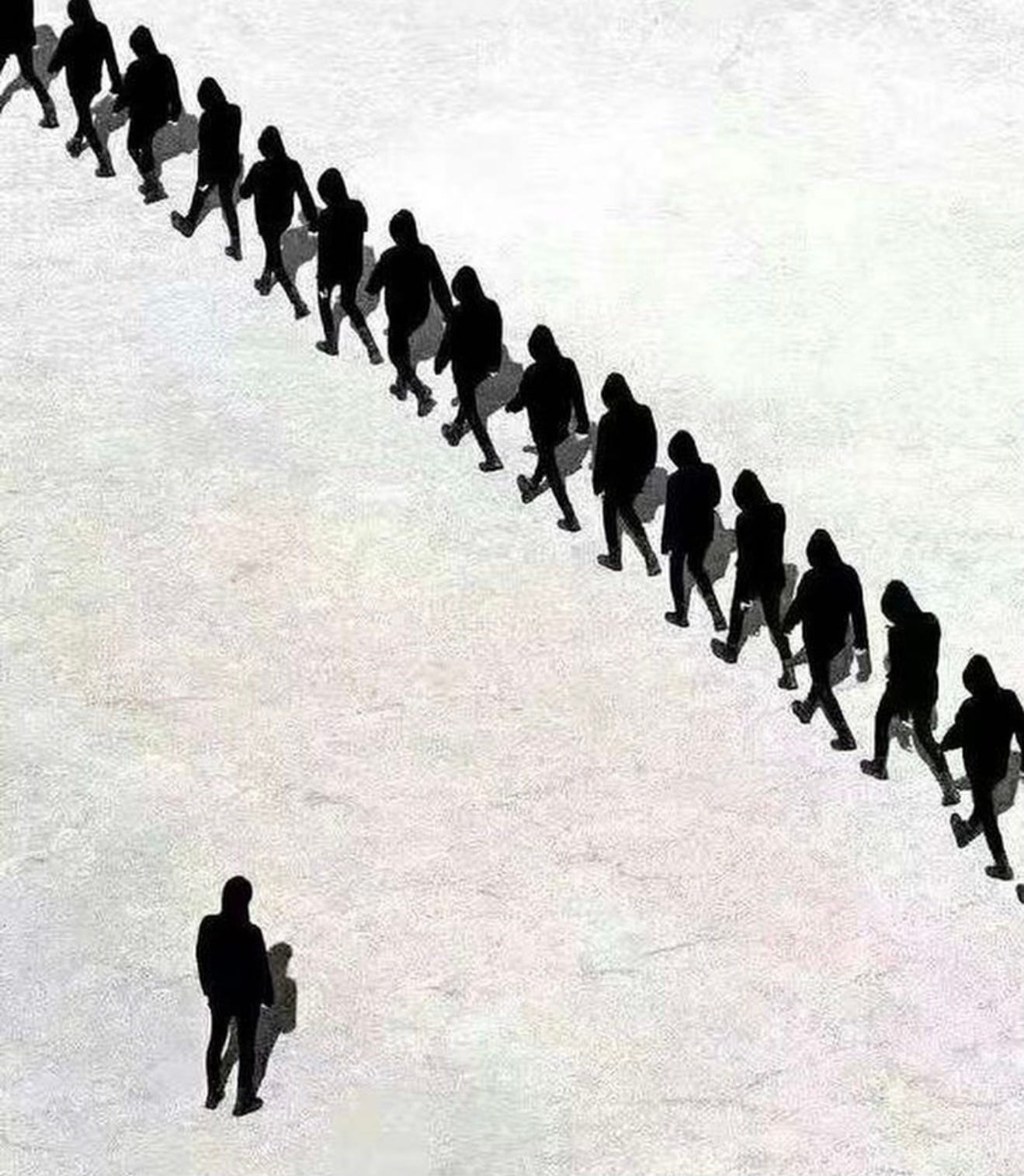
It’s not just me, the feeling is real. Every week now I hear about someone who’s lost their job. Entire industries are shifting. People are scrambling.
Comfort is disappearing. And I believe that discomfort should be our radar. Not the problem.
“The educated, hardworking masses are still doing what they’re told, but they’re no longer getting what they deserve.” — Seth Godin
And now that the anomaly of 20th-century economic growth is over, we’re waking up to that.
I think the days of selling shit are numbered. People don’t want to be manipulated anymore.
It’s our task to define the companies of the future.
Where I‘m at
Currently I’m developing a financial plan—for myself, and for the collaboration with my tax advisor. Looking into other business plans to get a feel for how people define markets, metrics, and realism.
The most fun I have with crafting and testing bags. Pouring hours into development.
This week I’m going to start a trial at a small workshop that lets me use their laser cutting machines. Cutting parts by hand takes way too long. Additionally there a are more startups located at that place, hope to have some valuable exchanges there.
Some days, it’s chaotic. But it doesn’t scare me anymore.
Because for the first time since I started drawing cars when I was a child, I know why I’m doing it.
I‘d be super interested in your WHYs! Write them in the comments!
