

Startup Diary: 8 Months In…
Bagging For Business #11

Intro
First Things First - Did I achieve my „Next Steps“ from the last recap?
Good Old Swetlana From Next Door - An Advanced Sewing Course
Future Fabrics Expo Aftermath
All Things Businessplan
Startup Grant
Legal Form
Financial Planning
My Offering
The Competition
Risks and Measures
A Detour To Zurich
Being At Ease
Intro
It’s raining in Heidelberg. So I guess I‘m gonna stay here in the hotel lobby for the morning writing this newsletter. The atrium I‘m sitting in is the new part of the hotel building that used to be a brewery back in the days.
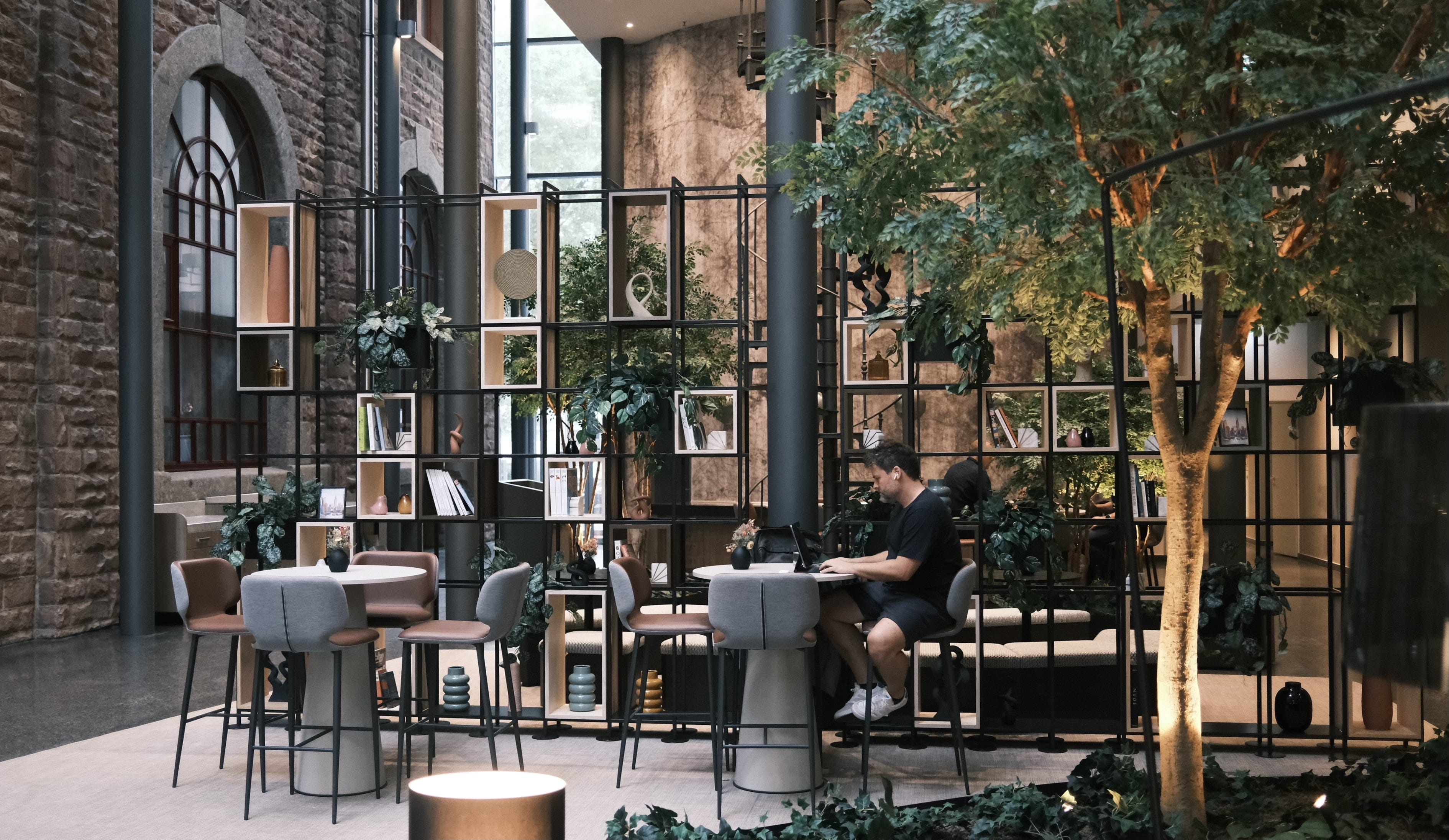
It‘s a strange but funny feeling sitting in this fancy business hotel lobby even though I begin my official unemployment phase 1st of September. Yes, eight months just raced past and my time at the transfer company comes to an end.
Seems like the perfect time to do another recap of my journey to self-employment.
So First Things First
In my last recap, „Starting Over My Professional Life - Three Months In…“ I set out to work on these next steps:
Pushing the branding forward
Do something along the lines of an advanced sewing course
Design and settle on the first three products
Researching suppliers and manufacturers
Let’s start with #2. My default approach to sewing up until now was learning by doing, but I always wanted to get some insight into professional experience you cannot catch up running blindly around the map. I needed a guided tour. Not necessarily to cut corners, more to see how vast the map is.
Good Old Swetlana From Next Door
Next to my parents house lives a russian couple we never had much contact with. The usual neighborhood relationship I imagine. After 20 years of greet and hide, my mom talked to her in length and it turned out that she’s a professional seamstress with over 40 years of experience. She worked as a tailor, pattern engineer, designer and even running a sewing school. A total workaholic who had to learn about self-care the hard way.
So I got in contact with her, sent some pictures of what I’ve produced so far and formulated specific questions where I need help. A week later I packed my stuff and drove up to Hamburg to meet her over at my parents house.
First of all it was a relief to hear that my sewing is pretty good already. She encouraged me that my stumbling-along-and-make-things-up-approach is the right way to go; the secret sauce even. It’s crucial to find your own solutions, to use your brain and don‘t blindly follow instructions.
At our session she unloaded an Ikea bag full of samples, bags and other items, and we spend the whole day talking about details, approaches, and especially about classic tailoring techniques you find in suits which have the quality and neat appearance I‘m looking for. My mother had to force us to come downstairs for coffee and cake.
Again, what a coincidence! This connection to Swetlana just appeared out of nowhere. Things just fall into place, and when you think about it, it totally makes sense. Like when a former colleague introduced me to a bag accessory brand from Potsdam, and through their Newsletter I learned about the Future Fabrics Expo in London. Probably the most important thing I did this year.
Which brings me to #4. I’d like to reframe “Researching suppliers and manufacturers” to just building a business network.
Future Fabrics Expo Aftermath
I wrote an extensive recap newsletter of the fair already, so if you‘re interested in a deep dive, go here.
But since then things developed that pushes my endeavor in a more defined direction.
Anyway, first and foremost I ordered a massive amount of fabric samples and established direct connections to the suppliers and manufacturers.
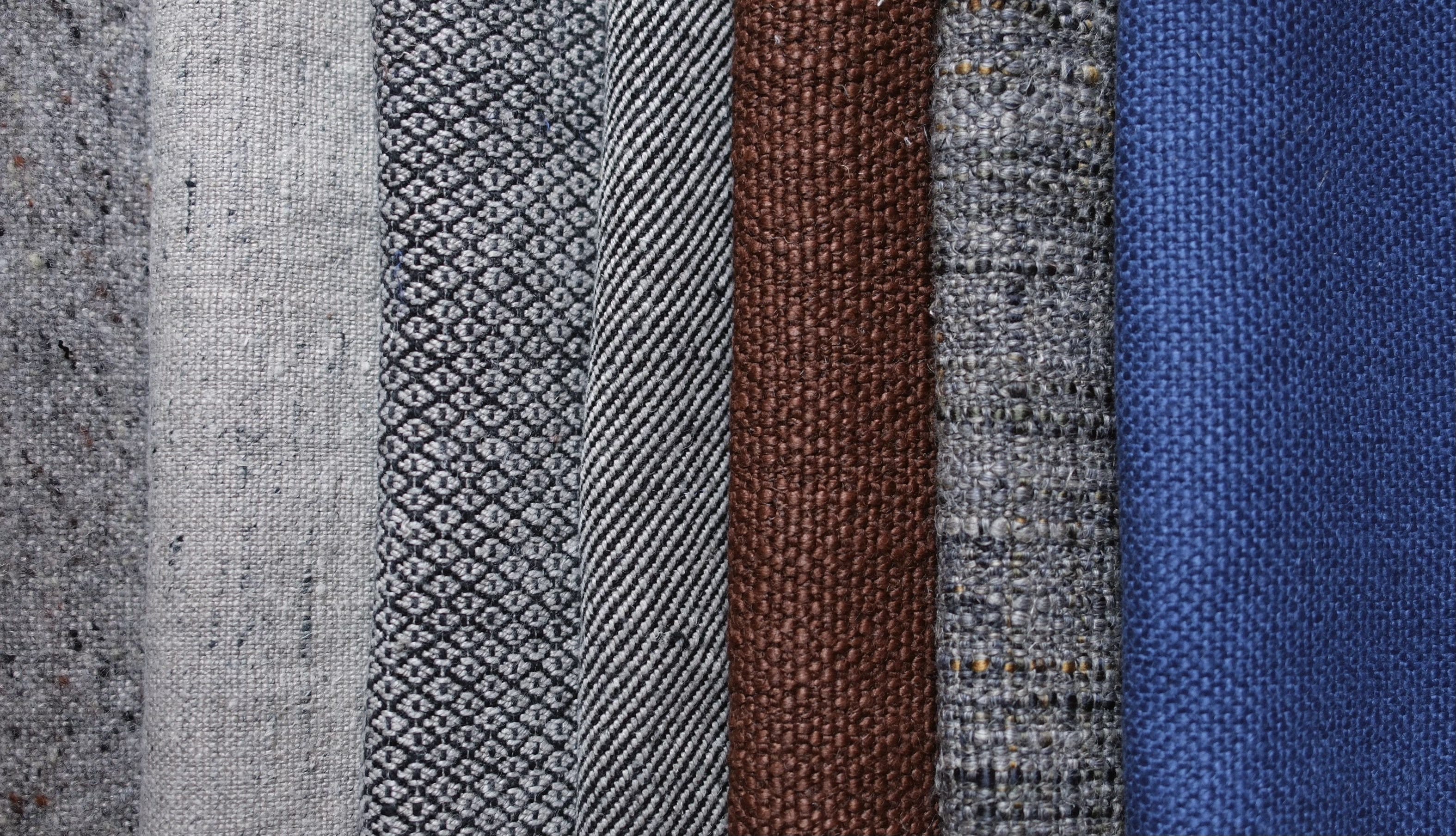
Small selection of my favourites so far…
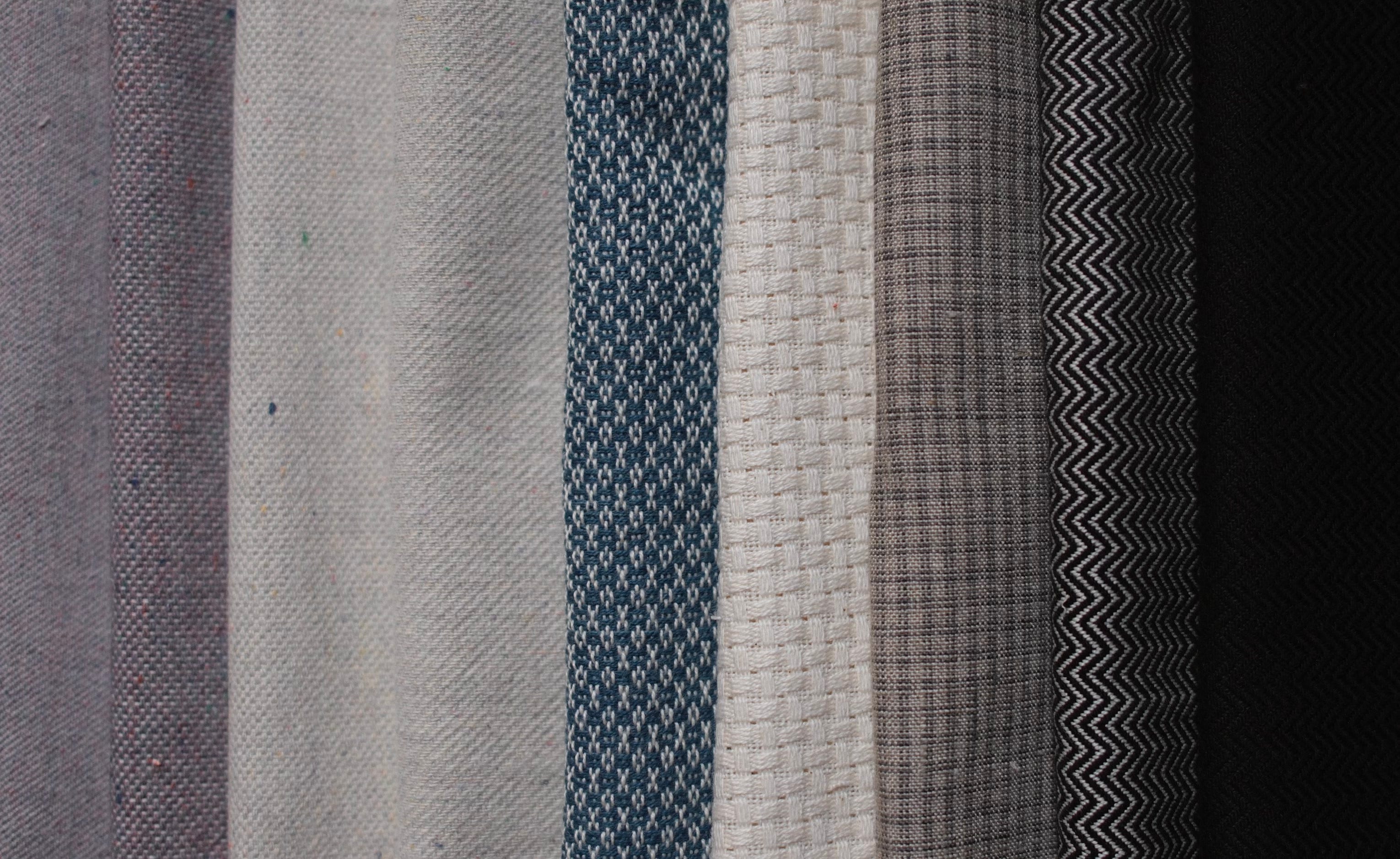
And who would have thought that my newsletter turns out to be of huge help. Every time I reached out to the companies I added a link to my Substack. And many of them could relate to how I‘m doing things, what I’m trying to achieve with Geist, and were eager to collaborate.
The other big connection I made was the one with VORN, the Berlin Fashion Hub. I visited their premises in the BIKINI mall and talked with the Co-CEO in depth about the possibilities of collaboration and being part of the community.
VORN unites motivated people who want to change how things are done in a highly waste- and harmful industry. I think of VORN as a harbor for people like me—critical of the industry, but eager to take action and build businesses on new ideas, rather than just protest and dream.
Personally, being part of their cooperative means access to a strong network. Instead of standing alone, we negotiate with manufacturers as a group, building trust and signal deal-making power. Then there’s the opportunity to officially found my company under their Berlin umbrella—instead of Potsdam’s less favorable financial setup. This also means to test ideas directly in the community and with visitors at the BIKINI mall—whether through pop-ups, events, or showroom presentations.
At the same time, I bring in my own background from the Volkswagen Design Studio in Potsdam: Design, generative modelling, storytelling, and especially the problem-solving oriented processes that made us unique. All of that along with a professional network that could share valuable expertise with other members.
With VORN collaboration runs through everything: Coworking, shared sourcing, storytelling, crowdfunding, logistics and storage, and programs designed to foster innovation and scaling.
The idea that the future of business could look less like rigid companies and more like flexible communities really stuck with me.
All Things Businessplan
#1 'Pushing the branding' & #3 'Settle on the first three designs' come together under this umbrella. I aim to found Geist beginning of next year. So I spend a lot of time talking to business advisors and planning out the steps that need to be done.
I published an introduction to Geist end of March, just a week after I published the last recap. It was the first attempt to capture the essence of the brand, and I shared the first ideas for my logo.
Distilling all of that—and what I learned and designed in the past months—into the boundaries of a businessplan was the next big hurdle to overcome. It’s the first time I’ve put all the ideas, values, numbers, and risks into one coherent document, and it gave me a clearer picture of where I stand.
Doing that has a very practical reason too: you need it to be eligible for the start-up grant (‘Gründungszuschuss’) from the German Federal Employment Agency.
Start-Up Grant
It‘s been quite confusing what that actually means. How much money do I get, and especially when?
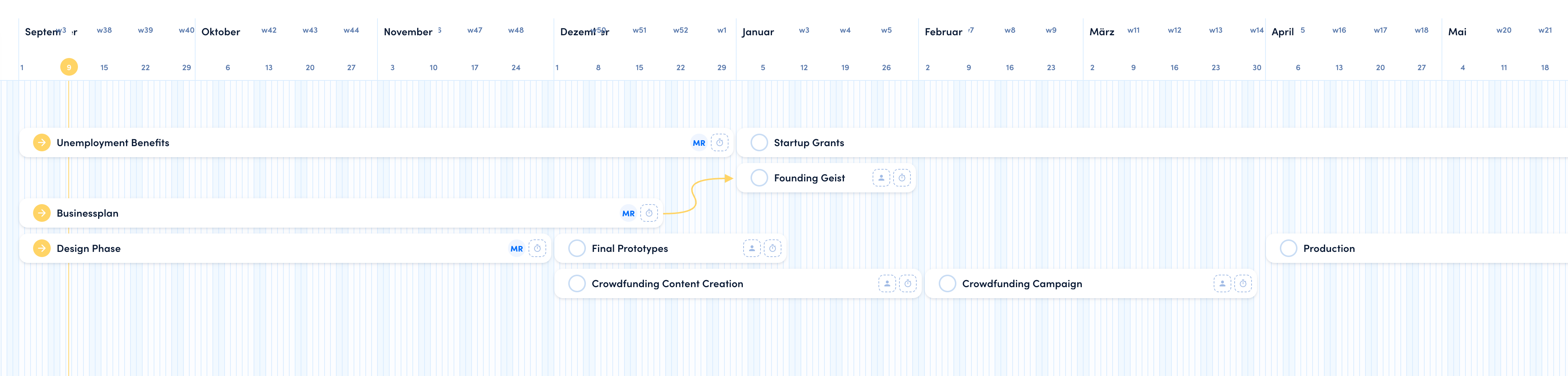
The moment you found—which in my case will be January—I would get another six months of unemployment benefits. But the Employment Agency doesn‘t cover health insurance and social security anymore; makes sense because technically I‘m not unemployed anymore. So they add 300 bucks to the benefits to help you cover a bit of that.
So my rough time planning looks as following:
Legal form
This led me to the next question, what legal form is the right one for my business. It‘s a tricky question, and a bit more complex than you might think. I‘ll try to brake it down as simple as possible:
For a solo founder there are two ways to found in Germany: As a corporation (Kapitalgesellschaft) or sole proprietorship (Einzelunternehmen).
There are three main differences:
Taxes: As a sole proprietor you pay your taxes through income taxes (Einkommenssteuer). As a corporation you pay corporation tax (Körperschaftssteuer), trade tax (Gewerbesteuer) and VAT (Umsatzsteuer). Calculated together the percentage of these three taxes is lower than your normal income tax, and therefore you pay less taxes as a corporation. But, and this is the clue, as a sole proprietor you don‘t have to pay income taxes on your first 24.500 Eur profit per year. So calculations say that if you‘re below roughly 30.000 EUR profit there‘s a tax advantage as a solo proprietor, above there‘s an advantage to be a corporation.
Founding a corporation is more complex and expensive as starting as a sole proprietorship, where you only have to register a business (Gewerbeanmeldung). A corporation needs articles of association (Gesellschaftsvertrag/Satzung) and therefor a notary who also handles the commercial registration (Handelsregister). You need capital, 25.000 Eur as a GmbH, or 1 Eur as an UG, and the registration of your business (Gewerbeanmeldung) as well. Money-wise—if we exclude the capital needed—the process cost around 30 Eur for a sole proprietorship and around 800 Eur for a corporation.
Liability: As a sole proprietorship you are liable with your private assets, as a corporation only your company assets are liable, because a corporation is it‘s own legal entity.
There‘re more differences like „professional visibility“ as corporation, which could result in easier negotiations with business partners, but it‘s crystal ball gazing to plan on these things.
Obviously there‘s always the possibility to change a sole proprietorship to a corporation later on, but many sources say that the process is quite complicated. It‘s not just update the registration, basically you have to found a new company and transfer all the old assets, contracts etc. over to the new one. Legally that‘s a lot.
As for now I decided to be a corporation from the beginning. I‘ll still talk to some people at VORN about it because that‘s their daily bread and butter. Important will be to not spoil the start-up grant. If you start a GmbH with 25.000 of capital on your account you might not get it. So starting as an UG would be my choice.
As an UG you‘re obliged to put 25% of your yearly profits on the company account. Whenever you have finished collecting the 25.000 Eur you automatically transform to be a GmbH.
Financial Planning
A big part of the business plan is the financial plan. I won’t go in detail here but I worked on calculating everything from revenue planning, incl. Revenue streams, production cost, revenue forecast, and operating expenses to profitability, funding needs, how my crowdfunding strategy plays into all of that, and planning the cash flow. All of that for the next three years.
I can highly recommend the Gründerplattform by KFW. They have very sophisticated online tools, templates and business plan examples to get the ball rolling.
The most important factor for the financial plan is to invest time in researching good numbers. Your numbers and factors need to be traceable.
If you have further questions, please reach out! In the comments or DM.
Now I want to share a summary of what I wrote in my business plan.
My Offering
Geist will produce plastic-free bags, made entirely in Europe, with a strong focus on functionality, material quality and haptics. For me the tactile experience is Geist’s unique selling point—most products today are over-staged visually, while the physical feel is neglected. I want the opposite: materials that calm, comfort, and simply feel right.
Geist is my very personal attempt to put soul back into products. In a way I‘m looking for that childhood wonder when choosing designs, sourcing materials, and testing the products day in and day out.
The first product line is pretty much defined, but not yet finished:
#1 Undercover Sacoche – small, flat, for the essentials.
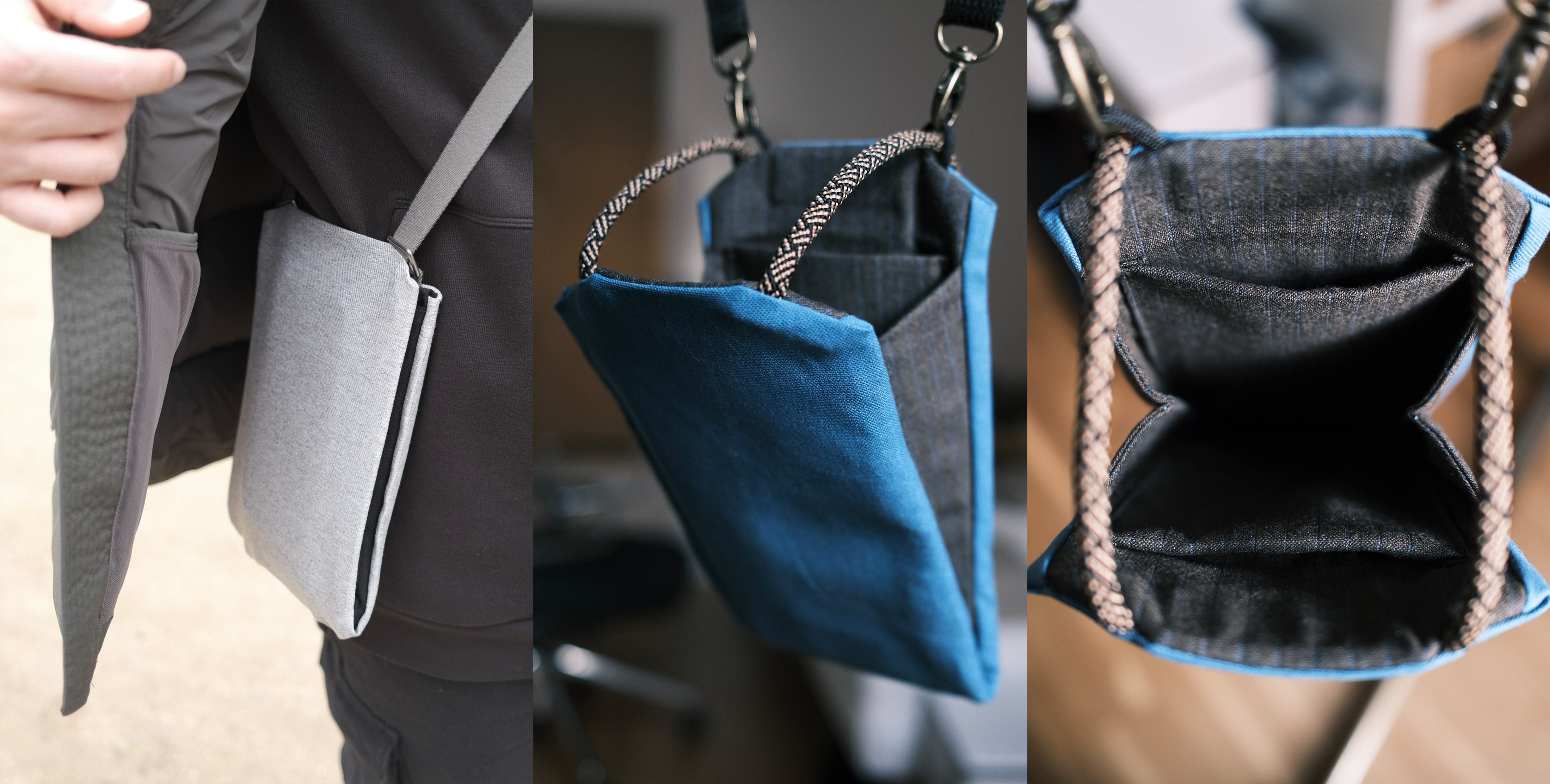
#2 The Cozy One – soft, with more space for everyday and business.

#3 Travel Convertible – adaptable for various travelling needs.
The Travel Convertible still needs it‘s first prototype. So the whole thing could go in a totally different direction.
These three will be produced in series with European workshops. Alongside them, I’ll continue making unique pieces by hand. They won’t be for sale in the usual sense but passed on through a curated gifting model. I’m experimenting with how value can be expressed outside of transactions. Imagine it as a way of appreciating meaningful and positive actions.
Also distribution channels are set: crowdfunding to launch new series, my own online shop (with integrated gifting tool), curated retail, and temporary pop-ups. Communication will rely on values and transparency rather than advertising campaigns—storytelling, process, and collaboration. Real world interactions, the direct contact customers will be central.
The Competition
I see Geist in the middle of the spectrum between highly functional and innovative brands like Bellroy and Peak Design, and sustainable brands only using natural materials, like QWSTION. In between, there is hardly anything. Most function-oriented brands work with polyester and nylon fabrics. Yet the market for natural textiles is at least just as innovative and future-oriented. Trade shows such as the Future Fabrics Expo, which has been steadily growing for years, demonstrate this trend. On the other hand, brands that work with natural materials often lack functionality. Geist aims to change that.
Risks And Measures
The risks are obvious: upfront production financing, low awareness at launch, dependency on me as a solo founder, fragile supply chains.
My measures: crowdfunding for liquidity, strong storytelling to build awareness, partnerships to reduce dependency, and multiple suppliers to keep the chain flexible.
The strongest measure is by far mutual partnerships with companies and communities that share the same values. European workshops, sustainable material suppliers, certification experts, VORN in Berlin, which connects me to a broader startup community.
For examples did I visit QWSTION a week ago.
A Detour To Zurich
Our trip to Heidelberg gave me the opportunity to visit the Factory Friday at the Werkstatt Zürich, which takes place every last friday of the month, It’s a 3,5 hours drive, and everyone who knows me knows I take every opportunity to sit behind the wheel.
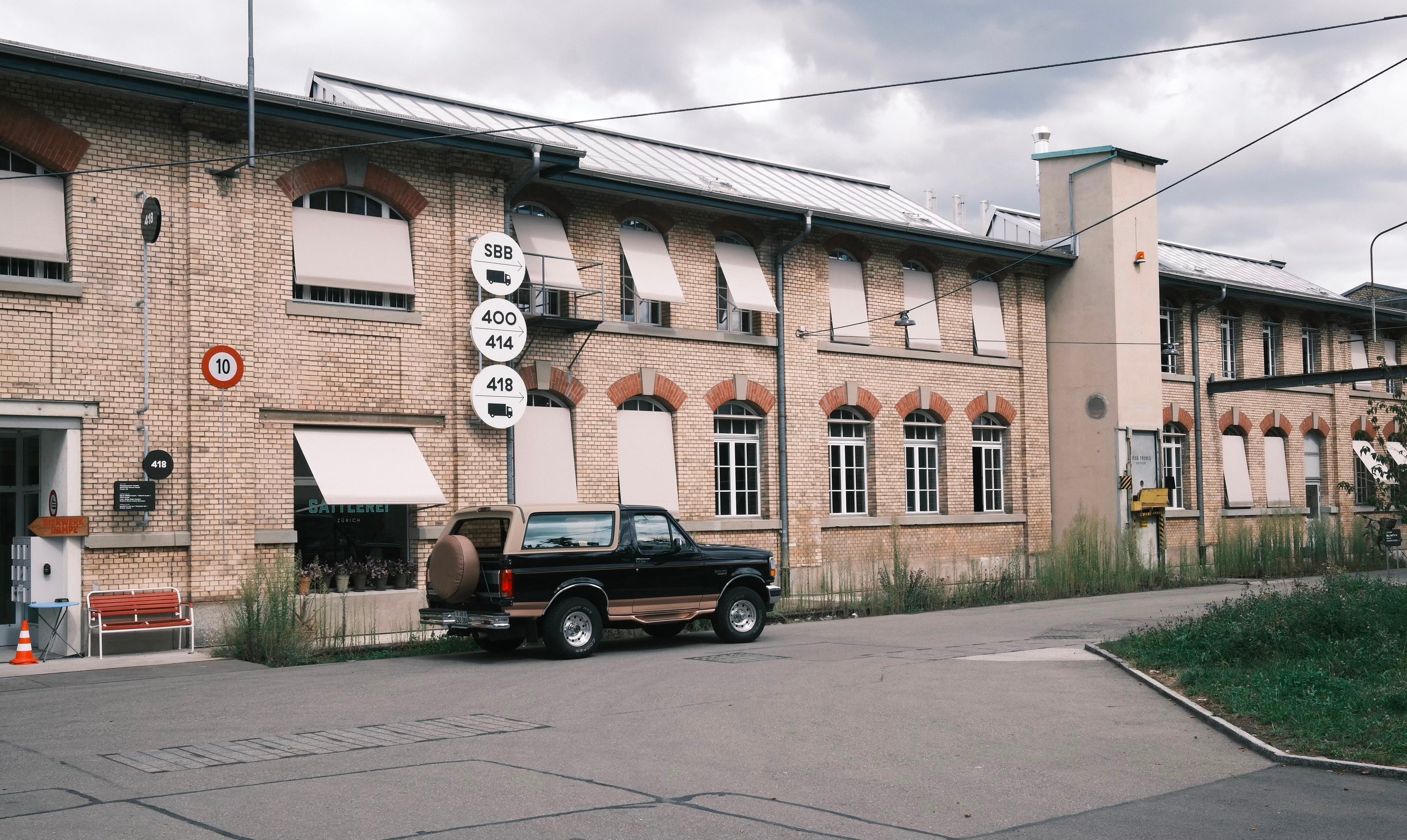
I asked QWSTION in advance to make sure that I‘d be able to talk to the employees or even one of the CEOs instead of standing behind windows. In my e-mail I also send them my critical article on their latest products. I thought perhaps—or better hopefully—that could be an interesting conversation starter.
There‘s a short Monocle article about the Factory Friday. If you want to learn more.
As promised, Christian Kaegi, the CEO, was there and even greeted me by name. He took more than two hours to talk with me. I was lucky: almost nobody else visited that day. Still, I felt very much welcomed.
We spoke about my critique — the usability flaws of the Roll Pack, the uncomfortable hook/ring system, the side zipper that scraped my hand raw. Christian admitted those issues were, and in fact, many had already been addressed in the newest iteration of the Rollbag. QWSTION doesn’t see their products as finished, but as ever evolving.
Then we turned to talk about the bigger picture. Together with Tremut, a German consultancy, QWSTION had mapped out the full footprint of their supply chain. The results surprised me: shipping by sea from Asia turned out to be more sustainable than sourcing alternatives from Europe. Even when they compared hemp from Switzerland, made to fabrics in Italy, with banana fabrics from Asia, the material that is now called Bananatex came out ahead. Driving the hemp around in trucks is more harmful. Apparently a thousand miles on a truck equals twenty-thousand miles across the sea. “Local” doesn’t automatically mean “better.”
But sustainability has its price. Producing a fully circular Bananatex version of my favorite backpack would drive costs close to €500. Christian doesn’t think the market is ready for that yet. Even their Simple Collection already runs on slimmer margins than my old Office Collection, simply because Bananatex is three times more expensive than cotton canvas.
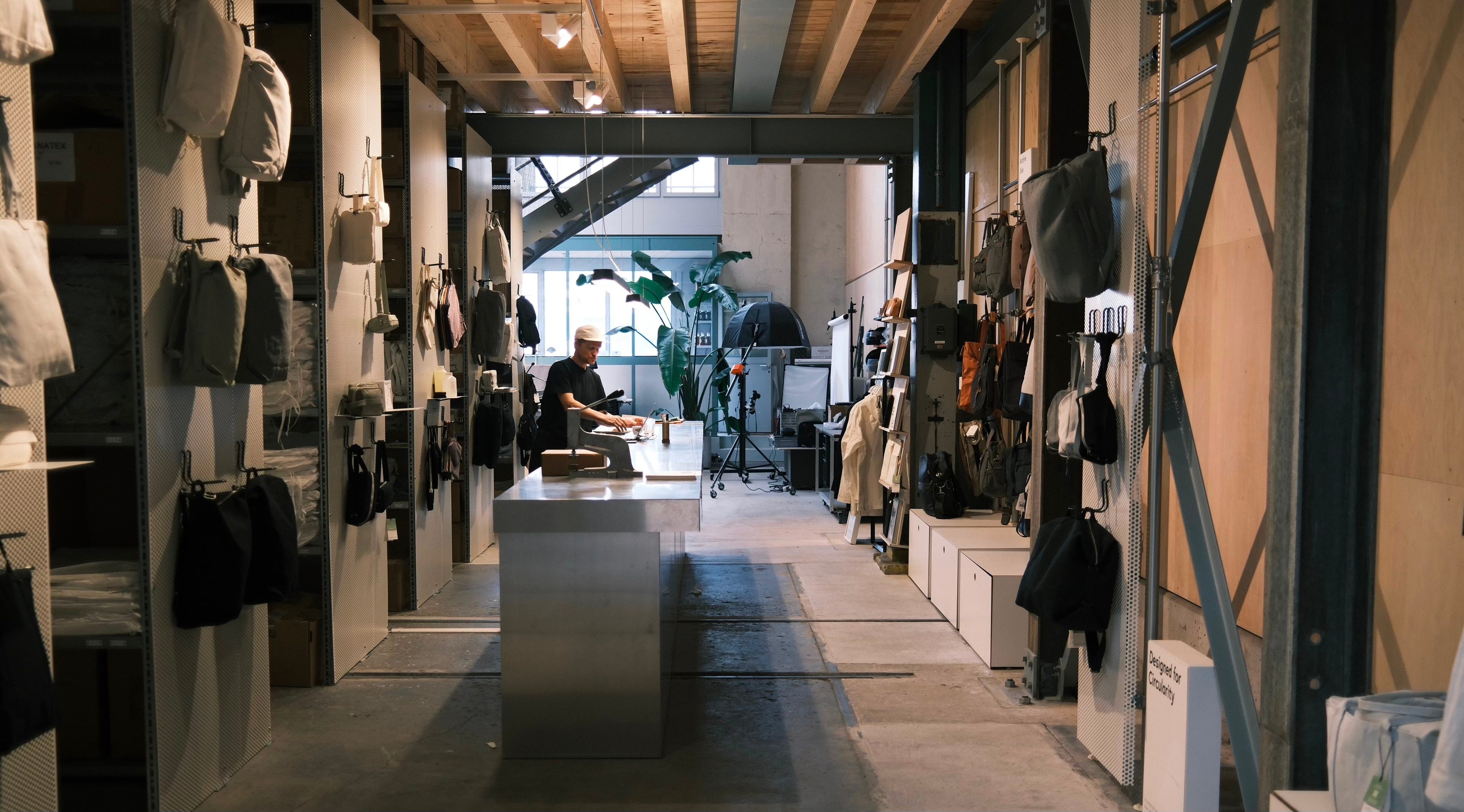
It left me torn. On one hand, my March criticism stands: the 2015 Backpack had an ease and emotional bond the newer Roll Pack couldn’t deliver. On the other hand, Christian showed me that behind every compromise lies a calculation — not just of cost, but of what the market is able (or willing) to understand. QWSTION isn’t chasing fashion cycles. They see themselves closer to furniture makers: long-term, iterative, with products that don’t go “out of fashion” after a season. I‘m really curious where my sourcing attempts will take me to find the balance I mentioned in the business plan chapter.
All of our conversation accumulated in an observation he makes about the market, something I feel myself: the internet belongs to giants like Google and Meta, squeezing the rest dry. What counts more and more is meeting people in real life, sharing values face to face, building trust without algorithms in the middle.
At the end of our conversation I asked him about advice for someone like me starting out:
Make decisions first, then you gain experience. Whether success or mistake doesn’t matter—only that you move forward.
Being At Ease
To end this newsletter I want to share the most important thing I learned over the last few months:
Being at ease with an ever evolving, always new situation, and facing it as it comes, and especially how to deal with it.
I don‘t stress myself anymore being productive all the time. Not that I had an issue there I guess, but I‘m always planning ahead, I tend to overthink, I routinely sat down to get work done in the morning even though I missed the energy for a specific task. And that‘s crucial. I learned to trust the instinct when I don‘t want to work.
And if my instinct tells me to join my girlfriend for her business trip, I just do. Sure my brain tells me that I loose a lot of time traveling, that I‘ll be distracted by other things. But my gut knows that this new environment will spark creativity and I‘ll write this newsletter in one go, instead of several sessions sitting in front of my computer at home.
When I started building my business I imagined that I just have to stick to the plan and work my ass off and eventually it’ll all work out. It does, but with stress as the side product. We all know that stress is unhealthy, still we act like our life depends on work. In this particular case stress emerges in the moments where you force yourself to work but your mind needs something else.
Now I realize by prioritizing my instinct, go with the flow, live in the moment, I’m even faster than I mapped out in my project planning tool. All of that while relaxing in front of a Top Gear episode while others sweat over an empty page.
I had a phase where I watched hundreds of videos by productivity gurus on YouTube. My goal was to enhance my work efficiency: Tools, processes, lifestyle. In hindsight, all of it bullshit. Not in the way you might think, it’s not bullshit because the techniques don’t work, they do, but you can’t replicate somebody elses rythm. Especially not if that person is also stressed, even if he or she pretends not to be. Still the content is valueable. You still know about the techniques and tools. I use them all the time. But not because I build a productivity system, but because at that moment in time the knowledge comes in handy. It’s the obsession with a culture, the productivity community or hustle culture, that makes you sick. It‘s a healthy impulse to see what they preach and soak in some interesting information, but whenever you oversaturate theory and loose sight of what you need to do to progress, you obsess. The deeper you go down the rabbit hole the more you loose connection to your own impulses and furthermore life itself.
And funnily enough since I stopped forcing myself to work I started to change. I just do things. I don’t worry about the workload anymore, or the unpleasantness of the process. My mind reconfigured to see advantages. Just do it then it’s done.
As always it’s about balance. You go a couple of steps here, then you go there, and then comes a time where there’s enough motivation and courage to start something you have no clue of achieving.
Instinct is your balance-o-meter. It gives you hints to where your system is staggering. Go there, even if it‘s uncomfortable.
